Top-Rated Cosmetic, General & Implant Dentist in Whittier, CA
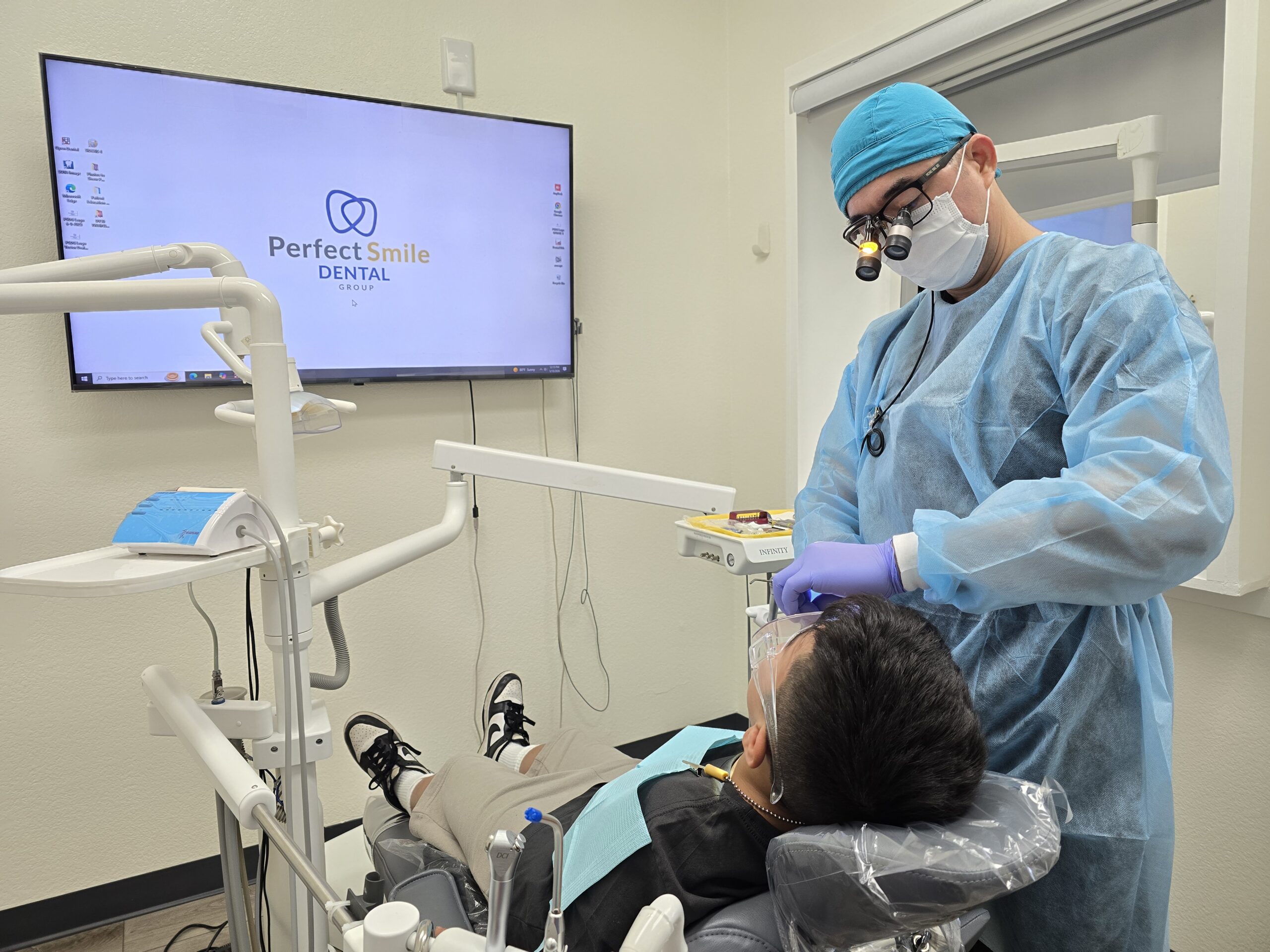
Dr. Michael Yang providing dental treatment at Perfect Smile Dental Group in Whittier, CA

Dental Implants in Whittier, CA

Replace missing teeth with dental implants for a stable, natural-looking smile. Dr. Michael Yang provides implant placement and restoration at Perfect Smile Dental Group in Whittier, CA.

Posted on Google Google
Heang La profile picture
Heang La
Google star 1Google star 2Google star 3Google star 4Google star 5Trustindex verifies that the original source of the review is Google.
Update Review 9/12/2026 I just had my implant crown placed at perfect smile dental Group in Whittier. The crown looks very natural and very comfortable when I chew. The whole dental visit experience was painless. I’m glad that I have found Dr. Michael Yang and I would recommend to my family and friends and anyone who is looking for a good dentist in Whittier. ————————————————- Update Review 2/22/2026 My severe grinding broke my dental bridge a few days ago. I recently had dental implants at Perfect Smile Dental Group in Whittier. My friends and family had implants done at another office and told me it was going to hurt a lot, but my dental implant placements at Perfect Smile Dental Group was painless, smooth and quick! I did have mild discomfort as expected. I was back to normal in 2 days. I am so excited to get my implant crowns in 3 months and won't have to hassle with flossing under my bridge no more! Dr. Yang is highly skill, professional and very patient. He took time to explain to me everything about dental implants before we started my case. I wanted to know about the process and healing time and whether it will hurt. After talking to Dr. Yang, I felt reassured and wanted to move forward with my dental implants and I am glad I did! It did not hurt at all! ---------------------------------------------------- Due to severe grinding, many of my teeth have problems. I hesitated going to the dentist for many years. My main reason for coming to the dentist was that my dental bridge broke. When I came to see Dr. Yang, his office was clean, welcoming and professional. The staff was really friendly. Dr. Yang was very through during the exam. He took photos of my teeth and showed me on the X-rays where I had cavities and where I needed to have dental crowns to prevent my teeth from breaking. He told me I need a night guard to protect my teeth from breaking when I grind my teeth when I am sleeping. I was very impressed with his attention to details. He took his time in explaining and answering all my questions. I don’t think I have had a dentist that cared enough to take the time to explain everything so I can understand what was going on in my mouth. I had the best cleaning. My teeth never felt so clean before! I have been coming here for my dental needs and have been very happy with their customer service that I decided to stay with this dentist for my dental implants. I highly recommend this office!
Posted on Google Google
George George profile picture
George George
Google star 1Google star 2Google star 3Google star 4Google star 5Trustindex verifies that the original source of the review is Google.
I had a great experience at Perfect Smile Dental Group. The staff was friendly and professional, and Dentist was skilled and attentive. They explained everything clearly and made me feel comfortable. Highly recommend!
Posted on Google Google
Kayla Winn profile picture
Kayla Winn
Google star 1Google star 2Google star 3Google star 4Google star 5Trustindex verifies that the original source of the review is Google.
I went in today as a new patient for cleaning & filling and Dr Yang was so kind and very thorough. Didn’t experience any discomfort or pain at all during the service. I had mentioned some issues i have and he was very helpful! Thank you again!
Posted on Google Google
Richard Godinez profile picture
Richard Godinez
Google star 1Google star 2Google star 3Google star 4Google star 5Trustindex verifies that the original source of the review is Google.
Had my daughter come in for fillings. She had such a great experience. They work wonderfully with kids and care a lot about their patients.
Posted on Google Google
Haydee Rico profile picture
Haydee Rico
Google star 1Google star 2Google star 3Google star 4Google star 5Trustindex verifies that the original source of the review is Google.
I got my fillings done here and plan to get the rest of my treatment plan finished. Dr. Yang is amazing, very kind and wasn’t afraid to explain things in detail as to why I needed certain treatments. He has great skills and I was even falling asleep during my fillings. Also Sarahy at the front desk is super nice and definitely calms your dental anxiety if you have any. I would recommend this place to anyone that needs a gentle dentist and a dental office that actually cares about their patients! I wasn’t able to get to the dentist in about 5 years and I came here originally for a second opinion after my previous dentist wanted about 7k to cap all my teeth because “fillings were just not possible.” Dr. Yang made it possible. Now I can focus on treatment that will better my smile and oral health. Thank you Perfect Smile Dental Group!!!
Posted on Google Google
Brent Martinez profile picture
Brent Martinez
Google star 1Google star 2Google star 3Google star 4Google star 5Trustindex verifies that the original source of the review is Google.
I am amazed at the time, expertise and personal care that Dr. Yang and staff provided. I searched for many Dentist in my area and my decision to use this office for me and my family was based on what Google reviews MY COMMUNITY has left. I trust the community's recommendations and am glad I have found such a special Dentist office for me and my family.
Posted on Google Google
Brianna Jaramillo profile picture
Brianna Jaramillo
Google star 1Google star 2Google star 3Google star 4Google star 5Trustindex verifies that the original source of the review is Google.
I haven’t been to the dentist in a few years. My last dentist would always say my teeth are fine and no further work needed even though I would complain about pain. It wasn’t a surprise when I decided to finally look for a new dentist due to the pain that I would need to get 9 fillings. Sarahy is the absolute best. She’s super friendly/professional. She explained my insurance cost and even provided payment plans. Dr Yang made the fillings as painless as can be. He thoroughly explained the process of what was going to be done before, explained the aftercare and answered any questions I had. I will definitely be recommending family and friends.
Posted on Google Google
Rosa Alves profile picture
Rosa Alves
Google star 1Google star 2Google star 3Google star 4Google star 5Trustindex verifies that the original source of the review is Google.
I wanted to leave a really positive review. I was referred by my insurance, and the service was excellent. Everyone was wonderful very attentive, explained everything carefully, gave me a small gift, and I also loved the atmosphere. The music was refined, the place was super clean, organized, and it was just excellent.
Posted on Google Google
Alyssa Gutierrez profile picture
Alyssa Gutierrez
Google star 1Google star 2Google star 3Google star 4Google star 5Trustindex verifies that the original source of the review is Google.
I had a routine cleaning + fillings done. Overall, great experience. I would recommend coming here!
Posted on Yelp Yelp
Eddy C. profile picture
Eddy C.
Yelp star 1Yelp star 2Yelp star 3Yelp star 4Yelp star 5Verified
I had a great experience.The staff was friendly and professional, Dentist and staff were skilled and attentive. They explained everything clearly and made me feel comfortable. Highly recommend!
Posted on Yelp Yelp
Kayla N. profile picture
Kayla N.
Yelp star 1Yelp star 2Yelp star 3Yelp star 4Yelp star 5Verified
I went in today as a new patient for cleaning & filling and Dr Yang was so kind and very thorough. Didn't experience any discomfort or pain at all during the service. I had mentioned some issues i have and he was very helpful! Thank you again!
Posted on Yelp Yelp
Kimberly W. profile picture
Kimberly W.
Yelp star 1Yelp star 2Yelp star 3Yelp star 4Yelp star 5Verified
I can't say enough great things about this dentist! My son came in with a very painful toothache, and the doctor got us in quickly and immediately helped him get relief. What really stood out was how thorough and caring he was. He took detailed pictures of my son's teeth, displayed them on the screen, and walked us through everything step by step. He explained what he was seeing in a way that was easy to understand and made sure we felt comfortable and informed before making any decisions. His bedside manner was outstanding--friendly, knowledgeable, patient, and genuinely caring. You can tell he loves what he does and truly wants his patients to understand their dental health. The entire experience was professional, stress-free, and reassuring. Front office is outstanding as well. If you're looking for a dentist who provides exceptional care and outstanding customer service, I highly recommend him. 10/10 experience. We are so grateful for the care my son received!
Posted on Yelp Yelp
Yvonne profile picture
Yvonne
Yelp star 1Yelp star 2Yelp star 3Yelp star 4Yelp star 5Verified
Dr. Yang has been the best dentist my family and I have experienced. He is so thorough and honest, he takes pride in his work and takes the time to complete the treatment needed, and explains it in detail for the patient to understand. The staff is friendly and so welcoming, I recommend Perfect Smile Dental Group to everyone.
Posted on Yelp Yelp
Melissa M. profile picture
Melissa M.
Yelp star 1Yelp star 2Yelp star 3Yelp star 4Yelp star 5Verified
I found this office through Yelp, and the amazing staff reviews are what convinced me to give them a try. I'm happy to say they were absolutely right on the 1st day! From my first phone call, Sarah was friendly, welcoming, and helped verify my insurance. I shared that I hadn't been to the dentist in a while and have a strong gag reflex, and everyone was incredibly understanding and accommodating. The dentist was kind, informative, and never judgmental. Sarah also took the time to explain my treatment plan, payment options, and next steps. The entire team made me feel comfortable and cared for so far.
Posted on Yelp Yelp
Melina M. profile picture
Melina M.
Yelp star 1Yelp star 2Yelp star 3Yelp star 4Yelp star 5Verified
I have recommended this dental office to so many people! Service is great staff is amazing and very attentive. I was very scared of going to a new dentist because of some bad experiences in the past but Perfect Smile Dental Group has changed how I feel about going into a dental office. Dr. Yang is the best by far and really takes his time with each patient. Very glad I found him in Whittier!
Posted on Yelp Yelp
Duraan O. profile picture
Duraan O.
Yelp star 1Yelp star 2Yelp star 3Yelp star 4Yelp star 5Verified
Literally the best dentist and care staff I've ever had. Had cavities filled and a tooth removed and it was as completely painless. Highly recommend.
Posted on Yelp Yelp
Vincent B. profile picture
Vincent B.
Yelp star 1Yelp star 2Yelp star 3Yelp star 4Yelp star 5Verified
I was in the market for a new dentist and came across Perfect Smile Dental Group here on Yelp. With all the positive reviews I decided to go in and see for myself. I had a chipped tooth and desperately needed a cleaning and X-rays as well. The staff were extremely friendly and informative and took care of all my requests during my appointment. They provided quality care and did a great job with my cleaning. They also did a great job with my filling for my chipped tooth, which looks brand new! Definitely will be looking to be a life long patient at this dental practice.
Posted on Yelp Yelp
Yvonne Z. profile picture
Yvonne Z.
Yelp star 1Yelp star 2Yelp star 3Yelp star 4Yelp star 5Verified
Friendly, professional, empathetic staff. I told how scared I was and they were really considerate. This was the first time I was thoroughly explained what I needed done and explained what my insurance covered.
Posted on Yelp Yelp
Roland O. profile picture
Roland O.
Yelp star 1Yelp star 2Yelp star 3Yelp star 4Yelp star 5Verified
Being a new patient I was apprehensive about seeing a new dentist or even going into a new office, but I needed a cleaning fast and found Dr Yang's office, Perfect Smile Dental Group. The entire facility was very clean, decorative, organized and friendly. The staff made me feel welcomed, Julie the assistant was very professional and courteous. Dr Yang was very thorough, conversant and compassionate about his work. He gave me suggestions on how to maintain my teeth better, what my x rays consist of and what cleaning schedules would be ideal for future appointments. Perfect Smile Dental Group is top quality that everyone should be looking for, and I'm glad I found them. Thank you guys, see you at my next appointment.

Replace Missing Teeth With Dental Implants

Missing teeth can affect how you chew, how your bite functions, and the appearance of your smile. Dental implants replace missing teeth by using an implant placed in the jawbone to support a custom implant crown, implant-supported bridge, or implant-supported overdenture.

At Perfect Smile Dental Group in Whittier, CA, Dr. Michael Yang evaluates your oral health, available bone, bite, and long-term maintenance needs before recommending an implant treatment plan.

What Is a Dental Implant?

A dental implant is a small titanium post placed in the jawbone to replace the root of a missing tooth. After the implant integrates with the bone, an abutment connects the implant to the final restoration.

For a single missing tooth, that restoration is usually a custom implant crown. Dental implants can also support an implant-supported bridge when several adjacent teeth are missing or help stabilize an implant-supported overdenture when appropriate.

Diagram showing the structure of a dental implant with the crown, abutment, and implant body in Whittier, CA.
A dental implant has three main parts: the implant body, the abutment, and the crown.

3 Types of Dental Implant Treatment Options We Provide

Single-Tooth Dental Implant

Single-tooth dental implant with implant body, abutment, and crown replacing a missing tooth

A single-tooth dental implant can replace one missing tooth without relying on the neighboring teeth for support. Because the implant is supported by the jawbone, the healthy teeth next to the missing tooth do not have to be shaved down just to support the replacement tooth. After the implant heals and integrates with the jawbone, Dr. Michael Yang restores it with a custom zirconia implant crown designed to fit your bite and surrounding smile.

When appropriate, Dr. Yang prefers a screw-retained implant crown, which avoids leaving excess dental cement around the implant and allows the restoration to be accessed more easily if future maintenance is needed.

Implant-Supported Bridge

Implant-supported bridge replacing multiple missing teeth with two dental implants

When several adjacent teeth are missing, an implant-supported bridge can replace multiple teeth without relying on natural teeth for support. At Perfect Smile Dental Group, a common configuration is two dental implants supporting a three-unit bridge to replace three missing teeth.

Dr. Michael Yang plans implant position, restoration design, bite, and cleansability with the goal of creating a stable result that patients can maintain over the long term.

Implant-Supported Overdenture

Lower implant-supported overdenture stabilized by two dental implants

An implant-supported overdenture uses dental implants to help stabilize a removable denture. The overdenture connects to the implants through attachments, providing greater retention and stability than a conventional removable denture.

At Perfect Smile Dental Group, Dr. Michael Yang commonly plans four implants for an upper overdenture. For a lower overdenture, two implants may be used, with four implants considered when appropriate based on the available bone, bite, anatomy, and long-term treatment goals.

Are You a Good Candidate for Dental Implants?

The best candidates for dental implants are adults with healthy gums, enough jawbone to support an implant, and good overall oral health. However, you do not necessarily need to have perfect bone conditions from the beginning. Even patients who have experienced some bone loss may still be candidates for dental implants. When additional bone is needed, bone grafting or guided bone regeneration may be used to help create a stronger foundation for the future implant.

In certain cases, Invisalign® clear aligner treatment may be recommended before dental implant placement to create enough space for the future implant and crown. If the teeth next to a missing tooth have shifted into the open space, carefully moving those teeth can help create the room needed for the implant restoration to fit properly and look and function more naturally.

Before recommending a tooth extraction and dental implant, Dr. Michael Yang also considers whether the natural tooth can still be predictably saved. When appropriate, a damaged tooth may still be restored with treatment such as a dental crown. However, if a tooth has a severe fracture, extensive decay, or has become too damaged to be predictably restored, removing the tooth and replacing it with a dental implant may be considered.

Patients with diabetes or a history of gum disease may also be candidates for dental implants. What matters is how well the condition is controlled and whether the mouth is healthy enough for the implant to heal properly. Active gum disease may need to be treated and brought under control before implant treatment begins. Dr. Yang evaluates each patient individually rather than ruling someone out simply because they have a medical or dental condition.

Smoking and oral hygiene can also affect dental implant treatment. Smoking can interfere with healing and is associated with a higher risk of implant complications. This does not automatically mean that someone who smokes cannot receive a dental implant, but Dr. Yang considers smoking history, gum health, and oral hygiene before recommending treatment. Good home care and regular professional cleanings are also important for keeping the gums and bone around the implant healthy over time.

Age and jaw development are also important. Patients under 25 years old may not be ideal candidates for dental implants because the jawbone may still be developing. Since dental implants become fixed in the jawbone, it is important to make sure jaw growth is complete before treatment. Dr. Yang considers each patient’s age and development before recommending dental implant treatment.

Certain medications and medical treatments may also affect whether dental implant treatment is appropriate. Some medications used for osteoporosis, cancer, and other medical conditions can affect how the jawbone heals. Patients who have taken medications associated with osteonecrosis of the jaw may require additional evaluation and, when appropriate, coordination with their physician before proceeding with implant treatment.

If a tooth needs to be removed from an area where a dental implant is planned, Dr. Yang grafts the extraction site to help preserve the bone for future implant placement. In selected cases where the bone and surrounding anatomy are favorable, the dental implant may be placed at the same appointment as the extraction.

Bone Grafting and Guided Bone Regeneration for Dental Implants

Socket Preservation After Extraction

Socket preservation after extraction shown in four steps to preserve bone for future dental implants.

At Perfect Smile Dental Group, when a tooth must be extracted at a site planned for a future dental implant, Dr. Michael Yang grafts the extraction socket as part of ridge preservation. After a tooth is removed, the surrounding alveolar ridge naturally remodels and can lose width and volume as it heals. Socket grafting helps preserve the ridge so the site remains better suited for future implant placement.

For many staged cases, the grafted extraction site is allowed to heal for approximately three months before the dental implant is placed. In selected situations with adequate bone and favorable anatomy, the implant may be placed at the same appointment as the extraction; the extraction site is still grafted as part of preserving bone around the planned implant.

Guided Bone Regeneration (GBR) for a Deficient Ridge

Guided bone regeneration for dental implants showing bone graft material covered by a barrier membrane

Guided bone regeneration (GBR) may be used when an implant site already has insufficient ridge width or bone volume to provide adequate support around a dental implant. Dr. Michael Yang uses bone grafting and a barrier membrane when appropriate to rebuild and protect the deficient area while new bone develops.

Depending on the size and location of the defect, GBR may be performed before implant placement or at the same time as implant placement when conditions allow. When a staged approach is needed, the grafted site is allowed to heal before the implant is placed. The goal is to create adequate bone around the planned implant for stability, cleansability, and long-term support.

Your Dental Implant Treatment Process

1. Comprehensive Evaluation and Treatment Planning

New implant patients begin with a comprehensive oral exam, full-mouth X-rays, and a professional cleaning so Dr. Michael Yang can evaluate the entire mouth—not just the missing tooth. He reviews tooth decay, gum health, remaining teeth, bite, bone levels, and how the planned implant will fit into the long-term treatment plan.

When 3D imaging is needed, Dr. Yang refers the patient to an outside imaging center for a CBCT scan. The CBCT can help evaluate bone volume, anatomy, and implant position before surgery. If active decay, periodontal disease, or another condition could compromise implant success, those issues are addressed first.

2. Tooth Removal and Bone Grafting

When a tooth cannot be predictably saved and the site is planned for a dental implant, Dr. Michael Yang removes the tooth and grafts the extraction socket. After an extraction, the surrounding alveolar ridge naturally remodels and can lose width and volume as it heals. Bone grafting helps preserve the ridge and maintain a more favorable site for future implant placement.

For many staged cases, the grafted extraction site is allowed to heal for approximately three months before implant placement. In selected situations with adequate bone and favorable anatomy, the implant may be placed at the same appointment as the extraction; the extraction site is still grafted as part of preserving bone around the planned implant.

3. Dental Implant Placement

Once the implant site is ready, Dr. Michael Yang uses semi-guided implant placement with a planned surgical guide to maximize precision and help position the implant at the planned location and angulation for the final restoration. Implant position is planned with the future implant-supported crown in mind, so the surgical placement aims to produce the ideal restorative result for the crown’s appearance, bite, contours, cleanability, and long-term maintenance.

After placement, the implant is allowed time to integrate with the jawbone. Posterior implants are commonly left unloaded for approximately three months during healing. In selected anterior cases, an immediate temporary crown may be placed for appearance while being kept out of the bite during healing.

4. Implant Restoration With a Custom Crown or Bridge

Clinical photo of two implant-supported crowns replacing lower right missing teeth

After the implant has healed and is ready to be restored, Dr. Michael Yang takes a traditional implant impression using an impression coping so the laboratory can fabricate the final restoration. Depending on the treatment plan, the implant may be restored with a custom implant crown or an implant-supported bridge.

Dr. Yang commonly uses zirconia for implant crowns and prefers screw-retained restorations when the implant position allows. A screw-retained crown avoids leaving excess dental cement around the implant and also allows easier access to the restoration if future maintenance or screw replacement is needed.

At delivery, Dr. Yang checks the fit, contacts, appearance, and bite of the final restoration and makes adjustments as needed. The bite is rechecked again after delivery so the implant-supported crown or bridge is not taking excessive force during function.

5. Follow-Up and Long-Term Implant Maintenance

After the final implant crown or bridge is delivered, Dr. Michael Yang rechecks the bite within a few days and makes adjustments if needed. This follow-up helps make sure the implant-supported restoration is not receiving excessive biting force and that the patient is comfortable with the new restoration.

Long-term implant maintenance includes routine hygiene and examination visits, typically every six months. Dr. Yang monitors the gum tissue around the implant, bone levels on X-rays, crown or screw stability, bite, contacts, and how easily the restoration can be cleaned so potential problems can be identified early.

Why Choose Dr. Michael Yang for Dental Implants?

Dr. Michael Yang provides both the surgical and restorative phases of dental implant treatment at Perfect Smile Dental Group. He completed the two-year UCLA Dental Implant Continuum, where his training included implant diagnosis, treatment planning, surgical placement, bone grafting, restorative planning, and management of implant cases.

Dr. Yang plans implant treatment with the final restoration in mind. From evaluating the bone and positioning the implant with a semi-guided surgical approach to restoring the implant with a custom crown, bridge, or implant-supported overdenture, the goal is continuity between the surgical and restorative phases of treatment.

This comprehensive approach also allows Dr. Yang to follow the implant after treatment—checking the bite, soft tissue, bone levels, restoration stability, and cleansability during long-term maintenance visits.

Dr. Michael Yang, dentist at Perfect Smile Dental Group in Whittier, CA

Dental Implant Insurance and Financing

Dental implant benefits vary by PPO dental insurance plan. Our team can verify your benefits, submit implant-related claims, and request a pre-treatment estimate or predetermination for larger implant cases when appropriate.

  • Aetna
  • AlwaysCare
  • Anthem
  • Ameritas
  • Blue Shield of California
  • Cigna
  • Careington Care
  • Geha
  • Guardian
  • Humana
  • Metlife
  • Principal, Sun Life
  • United Healthcare
  • Unum

Dental insurance may cover only part of an implant treatment plan, and benefits vary by policy. Perfect Smile Dental Group accepts PPO dental insurance plans and does not accept HMO plans. If insurance does not cover the full cost, financing through Cherry is available for eligible patients. Because every implant treatment plan is individualized, treatment costs are reviewed privately after your examination and treatment planning rather than published online. Contact our office if you would like help understanding your insurance benefits or financing options.

Insurance Logo

What Are the Benefits of Dental Implants?

Dental implants can do more than fill the space left by a missing tooth. They can help restore how your smile looks, how comfortably you eat and speak, and how confident you feel in everyday life.

  • Restore your smile. Replace missing teeth with teeth designed to look natural and blend with the rest of your smile.
  • Feel more confident and less self-conscious. Missing teeth can make people hesitant to smile, laugh, take photos, or speak in social situations. Replacing them can help you feel more comfortable being yourself again.
  • Eat and chew more comfortably. Missing teeth can make certain foods difficult to enjoy. Dental implants can restore support where teeth have been lost so you can chew with greater comfort and confidence.
  • Speak more comfortably. Missing teeth, or replacement teeth that move, can sometimes affect the way you speak. Implant-supported teeth can provide greater stability when talking.
  • Help support your facial appearance. Tooth loss can lead to changes in the jawbone over time. Replacing missing teeth with implants can help preserve bone in the area and maintain support for your smile and facial appearance.
  • Help preserve the jawbone after tooth loss. The bone where a tooth once stood can gradually shrink after the tooth is lost. A dental implant replaces the missing tooth root within the jaw and helps maintain stimulation in that area when you chew.
  • Protect healthy teeth next to the missing tooth. A single dental implant can replace a missing tooth without shaving down the healthy teeth on either side of the space, which is often necessary with a traditional dental bridge.
  • Improve everyday quality of life. Being able to smile, eat, speak, and socialize without constantly thinking about missing teeth can make everyday activities feel easier and more enjoyable.
  • Make removable replacement teeth feel more secure. Dental implants can help hold an implant-supported overdenture more firmly in place so it moves less while eating, talking, or smiling.
  • Provide a long-term way to replace missing teeth. With good home care, regular cleanings, and routine dental visits, implants are designed to provide lasting support for replacement teeth.

What Should You Know Before Getting Dental Implants?

Dental implants can be an excellent way to replace missing teeth, but they are not the fastest or simplest option for every patient. Before choosing implants, it is important to understand the time, treatment, cost, and maintenance involved.

  • Dental implant treatment takes time. The implant needs time to heal and become stable in the jaw before the final crown or bridge is placed. If a tooth first needs to be removed and bone grafted, the entire process may take several months.
  • Getting a dental implant involves surgery. The implant is placed into the jawbone during a surgical procedure. Local anesthetic is used to keep you comfortable during treatment, but some soreness or swelling afterward is normal and varies from person to person.
  • The upfront cost may be higher than some other tooth-replacement options. A dental implant can cost more initially than options such as a traditional dental bridge or removable denture. Insurance benefits vary, and our office can help check your coverage and discuss financing options.
  • Not every implant site is ready right away. If there is not enough bone, or if tooth decay or gum disease is present, those problems may need to be treated first. Bone grafting may also be needed to create a stronger foundation for the implant.
  • Your health and daily habits can affect healing. Gum health, oral hygiene, smoking, certain medical conditions, and other factors can influence how well an implant heals and how it performs over time.
  • Dental implants still need regular care. Implants cannot get cavities, but the gums and bone around them still need to stay healthy. Brushing, cleaning around the implant, regular dental cleanings, and routine checkups are important for long-term success.
  • Dental implants are not completely maintenance-free. Over time, an implant crown, screw, bite, or surrounding gum tissue may need attention. Regular follow-up allows problems to be found and treated early.
Women receiving dental exam

Ready to Find Out if Dental Implants Are Right for You?

If you are missing a tooth, have a loose or failing tooth, or have been told that a tooth may need to be removed, the first step is a comprehensive new patient exam with Dr. Michael Yang.

During your visit, Dr. Yang will evaluate your teeth, gums, bite, overall oral health, and the area where a dental implant may be needed. Your implant evaluation is part of this comprehensive visit so that treatment can be planned with your long-term oral health, function, and final implant crown, bridge, or other tooth-replacement option in mind.

If dental implant treatment is appropriate, Dr. Yang will explain your options and the next steps so you understand what to expect before moving forward.

Frequently Asked Questions

When a tooth is removed and not replaced, the area can gradually change over time. The bone where the tooth used to be can begin to shrink, or resorb, because it is no longer supporting a tooth. The teeth next to the empty space may also begin to shift or lean into it.

The tooth directly above or below the missing tooth can also begin to supra-erupt, which means it slowly grows farther into the empty space because there is no opposing tooth to stop it. As this happens, the tooth may begin to hit the opposing teeth at an unfavorable angle, which can affect the bite and may increase the risk of tooth fracture over time.

These changes can also make the area harder to clean and reduce the amount of space available for replacing the missing tooth later.

If a tooth is removed from an area where a future dental implant is planned, Dr. Michael Yang places a bone graft in the extraction site to help preserve the bone and maintain a better foundation for future implant placement.

Replacing the missing tooth with a dental implant can restore the space, improve chewing function, and help prevent some of the changes that can occur when a missing tooth is left untreated.

Dental implants, dental bridges, and removable dentures can all be used to replace missing teeth, but they work in different ways.

A dental implant replaces the missing tooth from the root up. The implant is placed in the jawbone and supports a crown, bridge, or overdenture. Because the implant is supported by the jawbone, it does not have to rely on the neighboring teeth for support. It can also help preserve the bone in the area where the tooth was lost.

A dental bridge replaces a missing tooth by using the teeth next to the empty space for support. Those teeth may need to be shaved down for crowns so they can hold the bridge. A bridge can be a good option for some patients, especially when the neighboring teeth already need crowns or when implant surgery is not appropriate.

A removable denture can replace one or several missing teeth without implant surgery, but it is removable and may not feel as stable as teeth supported by dental implants. An implant-supported overdenture uses dental implants to help stabilize the removable denture, which can improve retention and make it feel more secure during chewing and speaking.

There is no single option that is best for every patient. Dr. Michael Yang considers how many teeth are missing, the condition of the neighboring teeth, the amount of available bone, your bite, overall oral health, and your treatment goals before recommending the option that makes the most sense for you.

Most adults with healthy gums, adequate jawbone to support an implant, and good overall health may be good candidates for dental implants. Even if you have experienced some bone loss, you may still be a candidate because bone grafting or guided bone regeneration can sometimes help rebuild the area before implant placement.

Patients with diabetes, a history of gum disease, or certain medical conditions may also be candidates depending on how well those conditions are controlled. Smoking, oral hygiene, medications, and the ability to heal are also considered when planning implant treatment.

For younger patients, age and jaw development are important. Patients under 25 years old may not be ideal candidates because the jawbone may still be developing. There is no specific upper age limit for dental implants; what matters more is the patient’s overall health, oral health, bone condition, and ability to heal.
Dr. Michael Yang evaluates each patient individually to determine whether dental implant treatment is appropriate and what may be needed to create a healthy, stable, and long-lasting result.

Look for a dentist who is well trained and has an in-depth understanding and experience in both implant placement and implant restoration. A dental implant should not be placed without thinking about the final implant crown or bridge. The position of the implant affects how the final restoration will look, feel, fit your bite, and how easy it will be to keep clean over time.

At Perfect Smile Dental Group, Dr. Michael Yang completed the two-year UCLA Dental Implant Continuum, with advanced training in implant diagnosis, treatment planning, implant surgery, bone grafting, and restorative planning. This training helps him plan the implant with the final restoration in mind from the very beginning.

A good implant dentist should also be thorough. He or she should take the time to understand why you need an implant, evaluate your teeth, gums, bone, bite, and overall health, and explain your treatment options, timeline, and what you can expect before treatment begins. You should feel comfortable asking questions and feel that your concerns are being heard.

The dental office and dental team also matter. Look for a clinic that is clean, friendly, professional, and organized, with a team that will support you throughout the entire treatment process.

Continuity of care is also very valuable. Some implant cases are treated by more than one dentist, and that can work well when everyone communicates closely. At Perfect Smile Dental Group, Dr. Yang personally evaluates and plans the case, places the dental implant, and restores the implant. This means the same dentist is responsible for your implant treatment from the initial evaluation through implant placement, the final crown or bridge, and long-term follow-up.

Finally, dental implant treatment can be a significant investment. Look for a dental office that is transparent about the treatment plan and costs and is willing to discuss insurance benefits, financing, or payment options that may help make treatment more manageable.
Not every patient needs a bone graft before receiving a dental implant. It depends on how much healthy bone is available at the implant site and whether a tooth still needs to be removed.

If you already have a missing tooth and there is adequate bone to securely support the implant, a bone graft may not be necessary.

If a tooth needs to be removed from an area where a future dental implant is planned, Dr. Michael Yang places a bone graft in the extraction site to help preserve the bone while the area heals. The extraction site is typically allowed to heal for about 3 months before the implant is placed.

If the tooth has been missing for some time, the jawbone may have already lost some width or volume. In those situations, guided bone regeneration (GBR) may be needed to rebuild the deficient area and create a stronger foundation for the dental implant. Depending on the amount of bone loss, the bone graft may be performed before implant placement or at the same appointment as the implant.

Dr. Yang evaluates the amount of available bone as part of your implant planning and will explain whether bone grafting is needed before treatment begins.

A bone graft placed after a tooth extraction helps preserve the ridge and maintain bone volume for a future dental implant. Even if you do not move forward with the implant right away, preserving the bone can make future implant treatment easier because there may be more bone available when you are ready.

One concern with leaving the space without a replacement tooth is that the opposing tooth can gradually supra-erupt, meaning it moves farther into the empty space because there is no tooth underneath or above it to stop it. As that tooth moves, it can create an area that traps food and may contribute to a localized deep gum pocket that is more difficult to keep clean.

The supra-erupted tooth can also reduce the vertical space available for a future implant crown. If too much space is lost, it can make the future restoration more difficult because there may not be enough room to create the implant crown at the proper height and shape.

For patients who are planning to replace the missing tooth with a dental implant, Dr. Michael Yang generally recommends completing the implant treatment when the area is ready rather than leaving the space untreated for many years. This helps maintain the space, restore chewing function, and protect the long-term treatment options for that area.

How soon a dental implant can be placed after a tooth extraction depends mainly on the amount of bone available and the condition of the extraction site. If there is adequate bone to securely support the implant and there is no active infection that would interfere with treatment, the dental implant may sometimes be placed at the same appointment as the tooth extraction.

In many cases, Dr. Michael Yang removes the tooth, places a bone graft to help preserve the extraction site, and allows the area to heal for about 3 months before placing the dental implant. This gives the bone graft time to heal and helps create a more stable foundation for the implant.

While the area is healing, a temporary removable partial denture, often called a flipper, can be used when needed to replace the missing tooth so you do not have to go without a tooth while waiting for the implant.

The total treatment time depends on where you are starting. Some patients already have a missing tooth and enough healthy bone for implant placement, while others may first need a tooth extraction and bone graft before the implant can be placed.

For a typical staged case at Perfect Smile Dental Group, Dr. Michael Yang may remove the tooth and place a bone graft, then allow the area to heal for about 3 months before placing the dental implant. After the implant is placed, it is usually allowed to heal and integrate with the jawbone for about another 3 months before the final implant crown or bridge is made.

Once the implant is ready for the final implant crown, an impression is taken and the crown is made by the dental laboratory, which usually takes about 2 weeks.

Some cases can be completed faster. If there is adequate bone and the conditions are favorable, the implant may sometimes be placed at the same appointment as the tooth extraction. Because every implant site is different, Dr. Yang will explain the expected timeline for your specific case before treatment begins.

The cost of dental implant treatment can vary depending on what is needed for your individual case. A single-tooth implant typically involves the dental implant placed in the jawbone, the abutment, and the final implant crown. Some patients may also need a tooth extraction, bone grafting, or other treatment before the implant can be placed, which can affect the total cost.

At Perfect Smile Dental Group, Dr. Michael Yang first evaluates your teeth, gums, bone, bite, and the area where the implant will be placed. Once we understand what treatment is needed, we can provide you with a clear treatment plan and review the costs with you before you decide to move forward.

If you have PPO dental insurance, our team can help verify your implant benefits, submit the necessary claims, and request a pre-treatment estimate for larger cases when appropriate. Financing through Cherry is also available for eligible patients to help make treatment more manageable.
Yes. Dental implant treatment can be a significant investment, so Perfect Smile Dental Group offers financing through Cherry to help make treatment costs more manageable. Financing approval and available payment terms are determined directly by Cherry.

We also accept many PPO dental insurance plans. Dental implant coverage varies from one insurance plan to another, so our team can help verify your benefits, submit claims, and request a pre-treatment estimate when appropriate so you have a better understanding of your expected costs before treatment begins.

During your treatment planning visit, we will review the recommended treatment, estimated costs, insurance benefits, and available financing options with you so you can make a decision that fits your dental needs and your budget.

Most patients are surprised by how manageable dental implant treatment is. Local anesthetic is used to thoroughly numb the area before the procedure, so you should not feel pain while the implant is being placed. You may feel some pressure or vibration during treatment, but the goal is to keep you comfortable throughout the procedure.

At Perfect Smile Dental Group, Dr. Michael Yang takes his time with anesthesia and explains what is happening during treatment so you know what to expect. If you feel uncomfortable at any point, let us know so we can make sure the area is adequately numb before continuing.

Dr. Yang also uses a conservative, minimally invasive surgical approach and keeps the gum incision as limited as possible while still allowing the implant to be placed properly. This can help reduce unnecessary trauma to the surrounding tissues and make recovery more comfortable.

After the procedure, some soreness, swelling, or tenderness is normal as the area heals. For most patients, the discomfort is manageable with over-the-counter pain medication. Many patients are able to return to their normal daily routine within 1–2 days, although recovery can vary depending on the individual and whether additional treatment, such as an extraction or bone grafting, was performed at the same visit.

Before the procedure begins, Dr. Michael Yang numbs the area with local anesthetic so you are comfortable during treatment. He then makes a small opening in the gum to access the jawbone and carefully prepares the site where the dental implant will be placed.

Dr. Yang uses semi-guided implant placement with a planned surgical guide to help position the implant at the proper location and angle. The implant is planned with the final implant crown or bridge in mind so that the finished implant crown can look natural, fit your bite properly, and be easier to keep clean.

Once the dental implant is placed into the jawbone, the gum is closed around the area and the implant is allowed to heal. For many posterior implants, Dr. Yang allows approximately 3 months for the implant to integrate with the jawbone before making the final implant crown.

In certain front-tooth cases, a temporary implant crown may be placed at the same appointment for appearance. The temporary implant crown is intentionally made a little shorter than the neighboring tooth so it does not take the full pressure of your bite while the implant is healing. This helps protect the implant during the healing period.

If a tooth needs to be removed or bone grafting is needed, those procedures may sometimes be performed during the same appointment depending on the condition of the bone and surrounding tissues.

While you are waiting for the implant site to heal, a temporary removable partial denture, commonly called a flipper, can be used to replace the missing tooth. A flipper helps maintain your smile while the area is healing and can also help maintain the space for the future implant restoration.

In selected cases, especially when replacing a front tooth, Dr. Michael Yang may be able to place the dental implant and provide a temporary implant crown at the same appointment. The temporary crown is kept out of the bite while the implant heals so that unnecessary pressure is not placed on the implant during the healing period.

The temporary option that is best for you depends on which tooth is missing, whether the implant can be placed immediately, and the condition of the bone and surrounding tissues. Dr. Yang will discuss the temporary tooth replacement options with you as part of your implant treatment plan.

For the first few days after dental implant surgery, it is best to eat soft foods that do not require much chewing. Foods such as yogurt, eggs, mashed potatoes, soup, pasta, soft fish, and other easy-to-chew foods can help you avoid putting unnecessary pressure on the surgical area.

Try to avoid hard, crunchy, chewy, or spicy foods near the surgical site while the area is healing. As you become more comfortable, you can gradually begin eating more solid foods again.

If Dr. Michael Yang places a temporary crown on a front dental implant, the temporary crown is kept out of the bite and should not be used for chewing while the implant is healing.

Smoking should be avoided during the initial healing period, ideally for about 3 weeks after implant placement while the gum tissue is healing and closing. Smoking can interfere with healing and may increase the risk of implant complications. The longer you are able to avoid smoking while the implant is healing and integrating with the jawbone, the better environment you are giving the implant to heal.

If avoiding cigarettes is difficult, talk with your physician or pharmacist about smoking-cessation options, including nicotine-replacement products such as a nicotine patch.

Most patients can gradually return to their normal diet as the surgical area becomes comfortable and healing progresses. Dr. Yang will give you specific instructions based on where the implant was placed and whether you also had a tooth extraction or bone graft at the same appointment.

Like any surgery, dental implant placement has some risks. However, in properly selected and carefully planned cases, serious complications are uncommon. Dr. Michael Yang uses a conservative, minimally invasive surgical approach, keeping the gum incision as limited as possible while still allowing the implant to be placed properly. This helps reduce unnecessary trauma to the surrounding gums and tissues and can make the healing process more comfortable.

Dental implant treatment also takes time because the implant needs to heal and integrate with the jawbone before the final implant crown is placed. Depending on the condition of the area, some patients may also need a tooth extraction, bone graft, or additional healing time before the implant can be completed.

Although uncommon, an implant may sometimes fail to properly integrate with the bone or develop an infection. Problems can also develop around an implant later if plaque and bacteria build up around the gums and bone. Smoking, a history of gum disease, poor oral hygiene, and certain medical conditions can increase the risk of implant complications.

Dental implants also require long-term care, but taking care of them is very similar to taking care of your natural teeth. Regular brushing, flossing, routine dental cleanings, and dental checkups are important for keeping the gums and bone around the implant healthy. The implant itself may remain healthy for many years, while the implant crown, screw, or other parts may eventually wear, loosen, or need maintenance or replacement.

There are also less common surgical risks depending on where the implant is being placed, such as being too close to a nerve or the sinus. Careful treatment planning and appropriate imaging are used to evaluate the available bone and nearby anatomy before implant placement and help reduce these risks.

At Perfect Smile Dental Group, Dr. Yang evaluates the implant site, your overall oral health, available bone, bite, and medical history before recommending treatment. His goal is to identify potential concerns ahead of time and plan the implant as carefully and predictably as possible.

Dental implants are generally a very predictable treatment when they are properly planned, placed, restored, and maintained. Long-term studies have found that approximately 93% to 96% of dental implants are still functioning after 10 years, although every patient and every implant site is different.

The long-term success of a dental implant depends on several factors, including the amount and quality of bone, gum health, implant position, your bite, oral hygiene, smoking, overall health, and how well the implant is maintained after treatment.

At Perfect Smile Dental Group, Dr. Michael Yang evaluates the entire mouth before implant treatment and plans the implant with the final crown or bridge in mind. Active gum disease and other dental problems are addressed first when needed, and the implant is carefully planned and placed to create a restoration that looks natural, fits the bite properly, and can be cleaned and maintained over time.

The longevity of a dental implant also depends on how well you take care of it at home. Daily brushing, flossing, and cleaning around the implant help keep the gums healthy and reduce the buildup of plaque around the restoration. Regular dental checkups and professional teeth cleanings are also important so the implant, gums, surrounding bone, bite, and restoration can be monitored over time.

Dr. Yang continues to check the implant and surrounding tissues during your routine dental visits so that any changes can be identified and addressed early.

Dental implants can last for decades, and in some patients, they may last 25 years or longer. Research studies show roughly 94–96% of dental implants are still functioning after 10 years or longer, although every patient and every implant site is different.

Once the implant heals, a process called osseointegration allows the titanium implant to become firmly integrated with the surrounding jawbone, creating a strong foundation for the replacement tooth.

How long your dental implant lasts also depends on how well you take care of it. Daily brushing, flossing, and cleaning around the implant, along with regular dental checkups and professional cleanings, are important for keeping the gums and bone around the implant healthy.

It is also important to understand that the dental implant and the implant crown are two different parts. The implant itself may remain healthy for many years, while the crown, screw, or other parts of the restoration may eventually wear or need maintenance or replacement over time.

At Perfect Smile Dental Group, Dr. Michael Yang checks the implant, surrounding gums and bone, bite, and implant restoration during routine dental visits so that any changes can be identified and addressed early.